
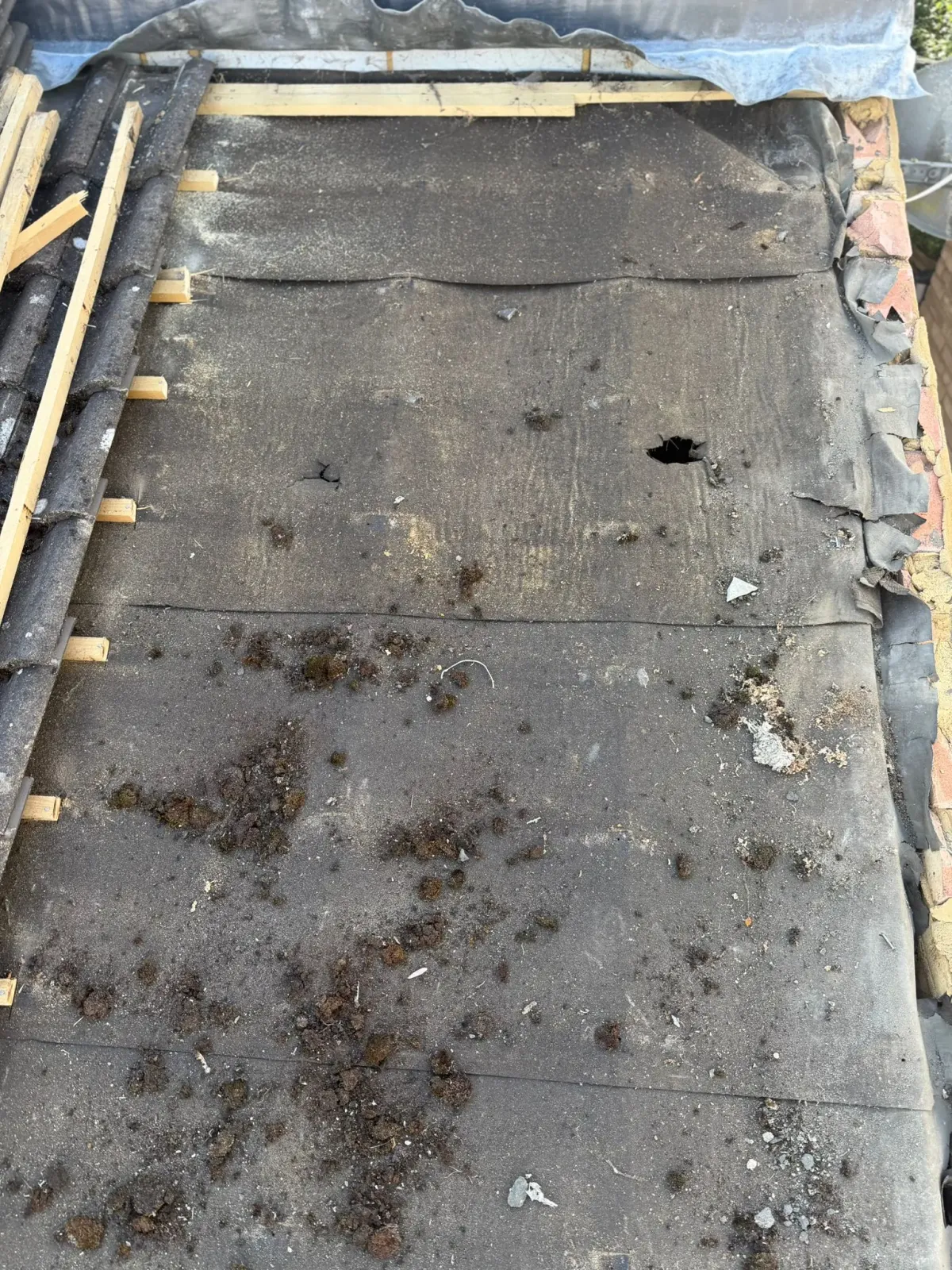
Immediate safety steps when water enters your home
Keep children, pets and other occupants away from the affected room. A leak may look like one contained drip, but wet plaster, saturated insulation and nearby electrical fittings can create less obvious hazards.
If the ceiling is bulging, sagging, cracking or shedding material, do not stand beneath it and do not puncture it. Close the room off where practical. Move to a safe place and contact the emergency services if part of the building appears at risk of collapse or loose materials create an immediate danger.
Never climb onto a wet or storm-damaged roof. Rain, wind, loose coverings and unseen damage make access dangerous. Wait for suitable conditions and a properly equipped professional inspection.
Move belongings and contain water safely
Move furniture, electrical equipment, rugs and valuables if they can be reached without standing beneath a damaged ceiling. Avoid carrying heavy items across a wet floor. Waterproof covers can protect items that cannot be moved when they can be fitted safely.
Put a stable bucket or watertight container beneath a drip and place a towel around its base to reduce splashing. Keep the route clear and check the container regularly. Wipe up small amounts of surface water only when this does not bring you near electrical equipment or unstable materials. Do not use powered fans or appliances in a wet area unless the supply and equipment are known to be safe.
Water near lights, sockets or electrical fittings
Treat water near a light fitting, socket, consumer unit, cable or powered appliance as an electrical risk. Do not touch a wet fitting or stand in water to reach the controls.
Isolate the electricity only if the consumer unit is safely accessible and you know how to switch off the relevant circuit or main supply. Otherwise, keep away and contact a qualified electrician or appropriate emergency professional. A roofer can investigate how water entered; electrical safety needs electrical expertise.
Check the loft only when it is safe and accessible
A loft view can sometimes show where water is travelling, but it should not become a hazardous search for the entry point. Enter only where access is safe, lighting is adequate and there is a boarded area or proper walkway. Never step between joists or onto insulation.
Use a torch rather than taking a mains-powered light into a damp space. From the safe access area, note dripping water, damp timbers, wet insulation or visible daylight. Do not disturb structural members or underlay, and do not attempt a repair while the storm continues. The internal drip may be some distance from the external defect, so record observations rather than assuming a cause.
Inspect the exterior from ground level
Once it is safe outside, look only from ground level or another established safe position. Missing tiles, damaged ridges, loose verge components, lifted flashing, debris or an overflowing gutter may be visible. Binoculars or camera zoom can provide a closer view without a ladder.
Keep clear of loose materials. Do not retrieve tiles, clear gutters or try to secure a covering during rain or strong wind. Damage may also have weakened components that still appear to be in place.
For an active leak or an unsafe roof in Surrey or surrounding counties, the Emergency Roof Repairs page explains the qualified regional availability. A problem that is stable and can be assessed as planned work may be better suited to the Roof Repairs pathway.
Photograph and record the damage
Take photographs or short videos from safe indoor and ground-level positions. Record the first water entry, affected ceilings or walls, damaged belongings and visible external defects. Wider photographs show context; closer images record staining, cracks or displaced components.
Note when you first saw the problem and the weather at the time. Keep records of calls, inspections, temporary measures and invoices. Describe observations rather than guessing the cause: “water appeared beside the chimney during heavy rain” is more useful than an unconfirmed diagnosis.
Common causes of leaks after severe weather
Several defects can produce similar internal symptoms. An inspection may consider:
- Missing or slipped tiles: wind can displace coverings and expose the layers beneath.
- Damaged flashing: metal or other weathering details around chimneys, walls and roof penetrations can lift, split or become detached.
- Blocked or overflowing gutters: heavy rain can overwhelm restricted gutters or downpipes, allowing water to spill against roof edges and walls. The Guttering page covers cleaning, repair and replacement enquiries.
- Damaged flat-roof coverings: seams, joints, edges or already vulnerable areas may be affected by wind, debris or standing water.
- Wind-driven rain: strong wind can force rain beneath laps, around junctions or through openings that do not leak in calmer conditions.
- Damaged ridges, verges or roofline components: displaced ridge pieces, loose verge details, fascia damage or affected soffits can expose vulnerable roof edges.
One visible defect may not be the only route of entry. Severe weather can also reveal earlier deterioration, so the surrounding roof and drainage details should be considered together.
Signs that professional attention may be urgent
Prompt professional advice may be appropriate when water continues to enter, several rooms are affected, the ceiling is sagging, materials are loose, debris has fallen, a flat-roof covering has lifted or an exposed section is visible. Electrical concerns need an electrician or emergency professional as well as investigation of the roof. Call 999 for an immediate danger to life.
Emergency attendance is not guaranteed. Skycraft accepts emergency enquiries across Surrey and surrounding counties, but attendance and same-day availability depend on current workload, travel conditions, location and safety. The broader Surrey coverage page lists the existing county and town pathways without implying a Surrey office or branch.
What a roofer may inspect
A roof inspection may consider the covering, ridges and verges, flashing, penetrations, flat-roof seams and edges, gutters and outlets, visible underlay and internal signs of water travel. Safe access and weather determine what can be examined initially. The aim is to distinguish the entry point from the path water has taken and identify connected defects rather than treating one symptom in isolation.
Temporary weatherproofing and permanent work are different. A temporary measure is intended to reduce further exposure until conditions allow a full repair. It may involve making a vulnerable area secure or weather-resistant without completing the final specification. A permanent repair addresses the confirmed defect with materials and details appropriate to the roof. Neither should be promised before access, condition and scope are understood.
Contacting your home insurer
If the damage may lead to a claim, check your policy and contact the insurer promptly. Ask what evidence it needs, whether emergency work requires authorisation and how temporary measures should be documented. Policies and claim processes differ, so no contractor or general guide can promise coverage. Keep photographs, notes, correspondence and invoices, but never undertake unsafe roof work because you think an insurer expects it.
Reducing the risk of future leaks
Routine ground-level observation and planned maintenance can reveal displaced coverings, deteriorated roof edges, overflowing gutters or changes around chimneys and junctions. Arrange inspection where staining recurs or a defect is suspected.
Keep gutters and outlets clear through an appropriate schedule, especially around leaf fall or after debris-producing weather. Maintenance cannot prevent every problem, but it can reduce avoidable drainage issues and provide a clearer record of condition. The recommended scope should still follow an appropriate assessment, not photographs or assumptions alone.
What to do next
If you are wondering what to do if your roof is leaking, concentrate first on people, electricity and the condition of the ceiling. Contain water only from a safe position, document what you can see and keep off the roof.
For an urgent roofing concern in Surrey or a nearby area, check the emergency pathway and its availability qualifications. For a stable defect or planned inspection, use the general repair route. You can also contact Skycraft Roofers with the property location, when the leak appeared, whether water is still entering and any safe photographs you have taken.