
Loose, split or lifted lead
Visible movement, splits or damage in the apron, stepped side flashing or back-gutter detail can justify closer inspection.
Chimney flashing and roof leadwork
Assessment and repair of lead flashing at chimney and roof junctions, together with verified pointing, flaunching and chimney-stack repair enquiries.
Emergency water ingress or storm damage should use the dedicated Emergency Roof Repairs pathway. This page covers scheduled chimney and roofing-leadwork enquiries; inspection is required to distinguish defective flashing, pointing, masonry, roof covering or other possible causes.
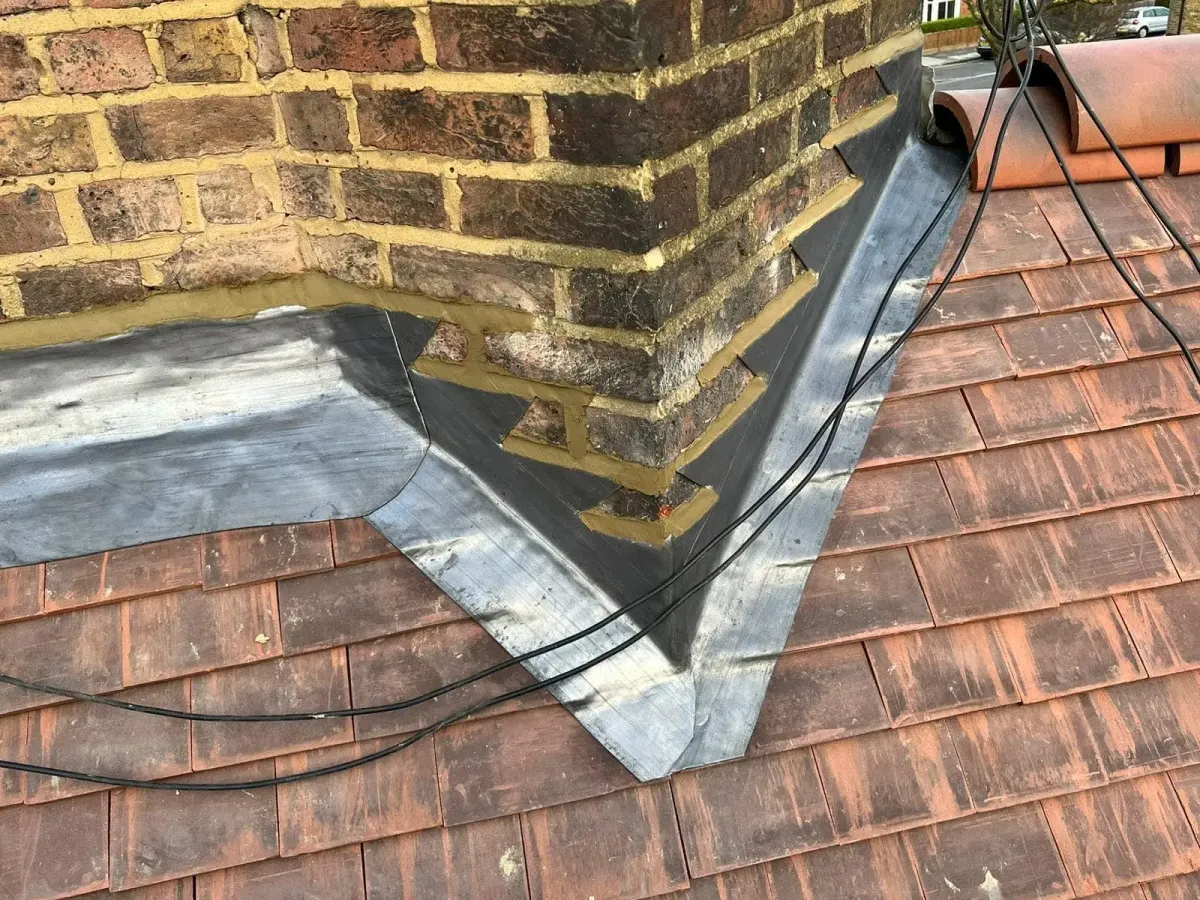
Chimney and leadwork overview
Chimney flashing protects the junction where a stack passes through the roof. Lead is commonly formed into stepped side pieces, an apron at the lower edge and a back-gutter detail behind the chimney so water can continue over and around the junction.
A damp mark near a chimney does not automatically prove that the lead has failed. The flashing, pointing, masonry, surrounding tiles or slates, roof junctions and likely water paths need to be considered before a chimney flashing repair or wider scope is recommended.
Skycraft does not service gas appliances, flues or combustion systems. Where a chimney is connected to a gas appliance or flue, an appropriately qualified specialist may also be required alongside any roofing or masonry work.
Warning signs
A visible symptom is a useful starting point, but it does not confirm the cause — inspection identifies the actual defect and its extent.
Visible movement, splits or damage in the apron, stepped side flashing or back-gutter detail can justify closer inspection.
Internal staining is a useful symptom to report, but water may travel from flashing, masonry, pointing or the adjoining roof covering.
Eroded or cracked pointing can affect the stack independently of the flashing and may need a separate repair scope.
Loose or damaged bricks and defects in the mortar around chimney pots require assessment as chimney-stack issues rather than assumed flashing failures.
Displaced flashing, masonry or surrounding roof coverings should be checked together because more than one detail may have been affected.
Abutments, valleys and penetrations can also require lead work in roofing, even where no chimney is involved.
Leadwork detail
Two further photographs showing lead flashing detail at a roof-to-wall abutment, illustrating the standard of leadwork shown in the overview above.


Chimney and leadwork scope
The appropriate scope depends on inspection, access and the condition of the chimney, flashing and surrounding roof.
Verified enquiries include local chimney brickwork repairs, repointing and flaunching defects, subject to the condition found and safe access.
Weathered or deteriorated mortar joints can be assessed for local repointing independently of the lead flashing.
Targeted repair or wider renewal can cover stepped side flashing, apron flashing and back-gutter details around the stack.
Roof flashing beyond the chimney can include leadwork at abutments, upstands and other roof junctions where the construction is confirmed.
The assessment considers flashing, pointing, masonry, adjoining coverings, junctions and likely water paths before a repair is proposed.
Inspection and quotation
Inspection identifies the actual cause — flashing, pointing, masonry, roof covering or another source — before a quotation is provided.
Share the property location, visible symptoms and when the problem was first noticed.
Consider access, chimney height, scaffolding needs and any connected roof details.
Distinguish a local repair from wider brickwork, flashing or roof-leadwork work before defining the work.
A quotation follows the assessment, based on the scope, access and materials identified.
Chimney and leadwork cost
A reliable figure depends on the property and the work identified. No fixed range can account for every chimney or roofline.
Chimney height, roof pitch and site constraints affect the access and scaffolding needed.
Whether local pointing or brickwork repair is suitable, or wider masonry concerns require separate assessment.
The condition of existing lead, fixings, mortar joints and the complexity of the apron, stepped sides and back gutter affect the work required.
The overall condition of the stack, crown/flaunching and surrounding masonry.
The extent of any additional roof leadwork beyond the chimney itself.
Whether an appropriately qualified specialist is also needed, for example where a gas appliance or flue is connected.
Repair or renew?
The decision should follow inspection of the chimney, flashing and surrounding roof.
A targeted chimney flashing repair may be appropriate where damage is localised and the surrounding lead, mortar, masonry and roof covering remain suitable.
Wider leadwork renewal may be considered where several details have failed or existing lead cannot support a durable local repair. Apparent structural movement requires appropriate assessment before work is defined.
The quotation should separate flashing work from any pointing, masonry, flaunching or surrounding roof repairs identified during assessment.
Geographic coverage
From its West Drayton business base, Skycraft handles chimney flashing, stack-repair and roofing-leadwork enquiries across Surrey, Greater London and surrounding areas. The location pages provide the appropriate route for local coverage information.
Suitable planned chimney or leadwork projects can also be considered more widely. Emergency water ingress or storm damage should use the Emergency Roof Repairs pathway, subject to current availability and safe access.
Chimney and leadwork evidence
These genuine records retain their documented locations and evidence boundaries; they are not used to diagnose another property or promise the same repair scope.
A genuine Skycraft Roofers chimney repair and leadwork project in Epsom, Surrey, documenting an existing flashing condition and newly installed lead step flashing at a chimney and roof junction.
View projectA genuine Skycraft Roofers leadwork project in West Drayton, documenting visible lead step flashing at a pitched porch roof and wall junction.
View projectChimney repointing and closure of the chimney pot from the top, carried out on a house in Harrow, Greater London.
View projectA new capstone was fixed to a parapet wall in Morden, Greater London, the wall was rendered and lead flashing was installed on the wall.
View projectRelated roofing routes
Related service areas
Frequently asked questions
Chimney flashing helps direct rainwater over and around the junction between the stack and roof. The detail can include stepped side flashing, a lower apron and a back gutter behind the chimney.
A local chimney flashing repair may be appropriate where damage is limited and the adjoining lead, mortar and roof covering remain suitable. Wider renewal is considered where the existing detail has deteriorated more broadly.
An internal damp mark does not identify the entry point by itself. Assessment considers the flashing, pointing, masonry, roof covering, junctions and likely water path before the cause and repair scope are defined.
Verified enquiries include local brickwork repairs, repointing and flaunching defects, subject to inspection and safe access. Apparent structural movement or work outside that scope requires appropriate specialist assessment.
Cost depends on roof height and access, scaffolding needs, the condition and extent of existing lead, the junction details, adjoining masonry and roof coverings, and whether local repair or wider renewal is appropriate.
Share the property location, visible symptoms, when they occur, the part of the chimney or roof junction involved and any safe photographs of the affected area. This supports assessment planning but does not replace inspection.
Start an enquiry
Share the property location, visible symptoms, whether the enquiry concerns chimney brickwork, flashing or general roof leadwork, and any photographs that may help.