
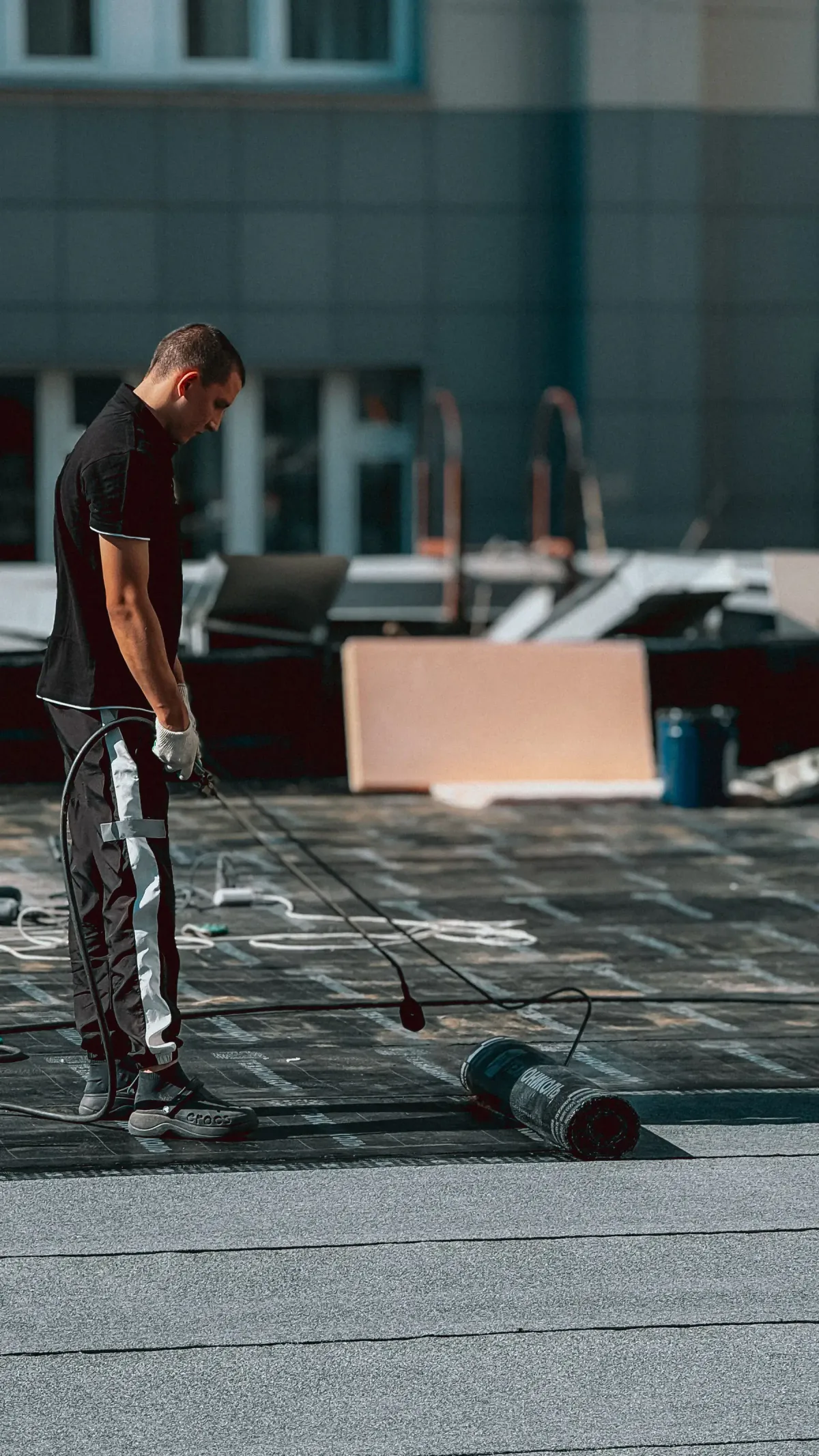
Typical flat-roof lifespan ranges
The figures below are useful for early planning, but they cannot predict the remaining life of an individual roof. They assume a suitable system installed to the relevant specification over a sound deck, with effective drainage and normal maintenance.
| Flat-roof system | Cautious typical planning range | Important context |
|---|---|---|
| Modern built-up or torch-on felt | About 20–30 years | The number of layers, membrane grade, installation method and detailing can differ substantially between systems. |
| EPDM rubber membrane | About 30–50+ years | Long membrane life still depends on sound seams, adhesive, perimeter details, penetrations and the supporting roof build-up. |
| Roofing-grade GRP/fibreglass | About 20–30+ years | The resin system, reinforcement, deck preparation, weather during application and movement detailing all matter. |
These ranges reflect published manufacturer and certification information rather than a Skycraft guarantee. IKO says flat-roof waterproofing may last between 20 and 40 years depending on the products and materials, while specific reinforced-bitumen systems carry separate assessed lives. Elevate cites an EPDM life expectancy of more than 50 years for its RubberGard membrane. For liquid-applied systems, Restec describes a 30-year BBA-certified lifespan for one specified system. Those examples show why the exact product and complete specification must be checked rather than applying one number to every roof.
Service life and warranty are not the same
Expected service life is an estimate of how long a roof system may continue to perform its intended function under stated conditions. It takes account of material performance, design, installation and exposure, but it is not a promise about one property.
A warranty is a legal or commercial commitment with a defined duration and conditions. It may cover materials only, workmanship only, or a particular installed system. It may require approved products, registered installers, inspections or maintenance, and it can contain exclusions. A 20-year warranty does not automatically mean failure in year 21, just as a long expected life does not create warranty cover.
If documents are available, identify the system, installer, installation date and warranty terms. When they are missing, an inspection can still consider the visible covering, seams, edges, outlets, flashings and the condition of the deck where accessible.
Why two roofs made from the same material can age differently
Installation quality and specification
The covering is only one part of a flat roof. Correct preparation, compatible components and careful detailing influence whether the whole build-up manages water and movement as intended. Poorly bonded areas, weak joints or unsuitable transitions can cause problems long before the main material reaches its expected age.
Roof deck condition
The deck must provide a stable, suitable substrate. Existing moisture, decay, movement or inadequate support can affect the covering above it. A new membrane laid over a compromised deck does not correct the underlying problem, so deck condition should form part of repair or replacement decisions.
Drainage, falls and standing water
A flat roof is normally designed with a fall towards outlets or gutters; “flat” does not mean that water should have nowhere to go. Leaves, debris, restricted outlets, local deflection or poor falls can keep areas wet for longer. Persistent standing water is a reason to investigate the drainage and roof build-up, not simply to apply another coating over the symptom.
Edges, outlets and penetrations
Perimeters, upstands, rooflights, pipes, vents and drainage outlets interrupt the main roof area. Their junctions have more changes of direction and often more components, making appropriate detailing especially important. A covering can appear generally sound while a local defect at one of these points allows water to enter.
Exposure, weather and sunlight
Sunlight, temperature changes, wind, rain, frost and airborne debris place different demands on a roof. Materials are formulated for external exposure, but the severity and combination of those conditions vary by site. Shading can also affect how quickly areas dry.
Foot traffic and later work
Unplanned access can puncture, scuff or strain a covering. Tools, ladders, stored materials and work on aerials, solar panels or plant can also damage a roof or its details. Do not walk on a roof unless it was designed for access and proper safety arrangements are in place.
Inspection and maintenance
Safe periodic checks can identify blocked outlets, damaged trims or developing defects before they affect a wider area. Maintenance should follow the roof system and access conditions. It cannot compensate for defective design or installation, but it can prevent avoidable drainage and damage issues from being ignored.
Signs a flat roof may need attention
Age alone does not diagnose failure. Look from ground level, a window or another established safe position for changes such as:
- cracks, splits or open joints in the visible covering;
- lifted seams, laps, edges or perimeter trims;
- blistering, bubbling or areas that appear detached;
- recurring leaks, staining or damp after rain;
- a soft, uneven or damaged deck suspected beneath the covering;
- water that remains in the same areas well after rainfall;
- damaged flashings, upstands, outlets or gutter connections; and
- punctures or disturbance following other work on the roof.
Some symptoms have more than one possible cause. Water can travel within a roof build-up before appearing indoors, and a surface mark does not confirm the condition beneath it. If water begins entering after severe weather, follow the safety steps in what to do when a roof is leaking after a storm rather than climbing onto the roof.
When a repair may still be appropriate
A repair may be reasonable where an inspection finds a localised defect, the surrounding system remains serviceable, the deck is sound and compatible repair materials and details are available. Examples can include an isolated puncture, a limited open seam or a defective local flashing, but the correct response depends on the specific system and what caused the damage.
Repair should address the defect and its cause. Repeatedly treating an internal stain or applying an incompatible surface product can hide deterioration without restoring the roof build-up. The Roof Repairs page explains the planned investigation and repair pathway.
When assessment or replacement may make more sense
Replacement or a broader professional assessment may be more proportionate where defects are widespread, leaks recur in several places, the deck is soft or damaged, details are failing throughout, earlier repairs are no longer holding or the system is near the end of its expected life and cannot be repaired reliably.
The decision should consider access, insulation, ventilation, drainage, outlets and adjoining details as well as the covering. It should not be based only on choosing a material from a lifespan table. Skycraft’s Flat Roofing page covers repair, replacement and new flat-roof enquiries without promising a specification before assessment.
Safe flat-roof maintenance
Check what can be seen safely after severe weather and at sensible intervals. Keep records of installation documents, inspections, maintenance and repairs. Arrange for leaves or debris to be cleared from outlets when needed by someone with suitable access, equipment and competence.
Do not climb onto a flat roof to test a soft area, inspect a leak or clear an outlet. Wet membranes, concealed deck damage and unprotected edges can create serious hazards. Avoid pressure washing, cutting, coating or patching unless the method is confirmed as suitable for the identified roof system.
Skycraft serves Surrey and nearby areas for local roofing work, with scheduled roofing projects considered nationwide. You can review the existing Surrey coverage or contact Skycraft Roofers with the property location, approximate roof age if known, visible symptoms and photographs taken from a safe position.
The practical answer
For planning purposes, modern flat roofs are commonly discussed in decades rather than a few years: roughly 20–30 years for modern felt, 30–50 years or more for EPDM and 20–30 years or more for roofing-grade GRP. The useful life of a particular roof may be shorter or longer.
Condition, construction and detailing decide what should happen next. If signs of deterioration are appearing, an appropriate assessment can establish whether a focused repair is still sensible or whether replacement would provide a more dependable solution.